All of our ball valves are designed, manufactured and sold factory-direct from our New Hampshire headquarters.

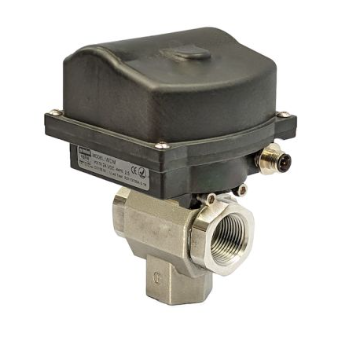
All of our ball valves are designed, manufactured and sold factory-direct from our New Hampshire headquarters.
Gemini Valve designs and manufactures ball valves for reliable on/off control in industrial and OEM equipment. Built in the USA, our valves are engineered for durability and long service life, from straightforward manual ball valves to fully automated assemblies.
As a factory-direct manufacturer, we offer standard and custom ball valve designs to meet exact application requirements, with rapid lead times and direct access to our engineering team.



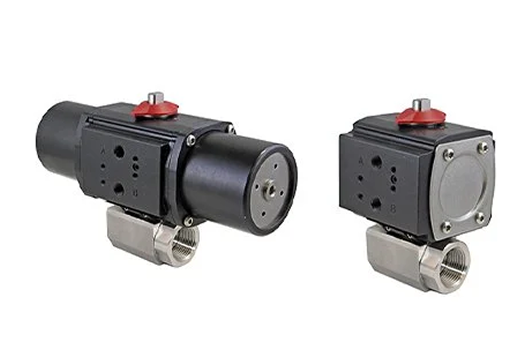
Ball valves are quarter-turn valves that control flow using a rotating ball with a drilled port. Known for their tight shutoff, fast operation and low maintenance requirements, ball valves are widely used in applications where dependable on/off control is necessary.
Gemini Valve manufactures a wide selection of ball valve configurations, including manual, pneumatic-actuated and electric-actuated designs. Our valves are available in multiple materials — such as brass, stainless steel and carbon steel — with a variety of sizes, pressure ratings and connection types to support diverse system requirements.
Our range of products includes compact mini ball valves as well as automated ball valves for process control and OEM equipment. All configurations are assembled and tested in-house to ensure consistent performance and application readiness.

When sourcing ball valves, buyers need consistent quality, responsive support and a manufacturer that understands real-world application demands. Gemini Valve brings over 50 years of engineering and manufacturing experience to every ball valve we produce, all from our U.S.-based facility in New Hampshire.
Operating on a factory-direct model, Gemini Valve designs, manufactures, tests and supports ball valves entirely in-house. This approach allows us to maintain strict quality control, offer flexible customization and move quickly when application requirements change.
When you partner with Gemini Valve, you gain:
From individual installations to long-term OEM programs, Gemini Valve supplies ball valves built to perform reliably in real operating environments.
A ball valve is a quarter-turn valve that controls the on/off flow of liquids or gases using a rotating ball with a drilled port. Its simple design provides fast operation, tight shutoff and long service life.
Ball valves are ideal for on/off flow control where quick operation and reliable sealing are required. Gate valves are better suited for applications that require minimal pressure drop when fully open. For a deeper comparison, see our guide: Gate Valves vs. Ball Valves: How to Pick the Right On/Off Valve for Your Application.
Both ball valves and plug valves are quarter-turn valves, but ball valves typically offer better sealing, smoother operation and lower torque requirements. Plug valves are often used in applications involving slurries or media with solids. Learn more in our comparison:
Plug Valves vs. Ball Valves: Key Differences & Applications.
Ball valve markings identify important information such as size, pressure rating, material and manufacturing standards. Understanding these markings ensures you select the correct valve for your system. Read more in our guide: How to Read Ball Valve Markings.
Yes, Gemini Valve specializes in custom and OEM ball valve solutions. Our engineering team can tailor materials, connections, actuation methods and performance specifications to meet unique application requirements.

For the most accurate pricing information, we’re happy to provide a quote for your specific application. In most cases, we will respond within 1 business hour!

